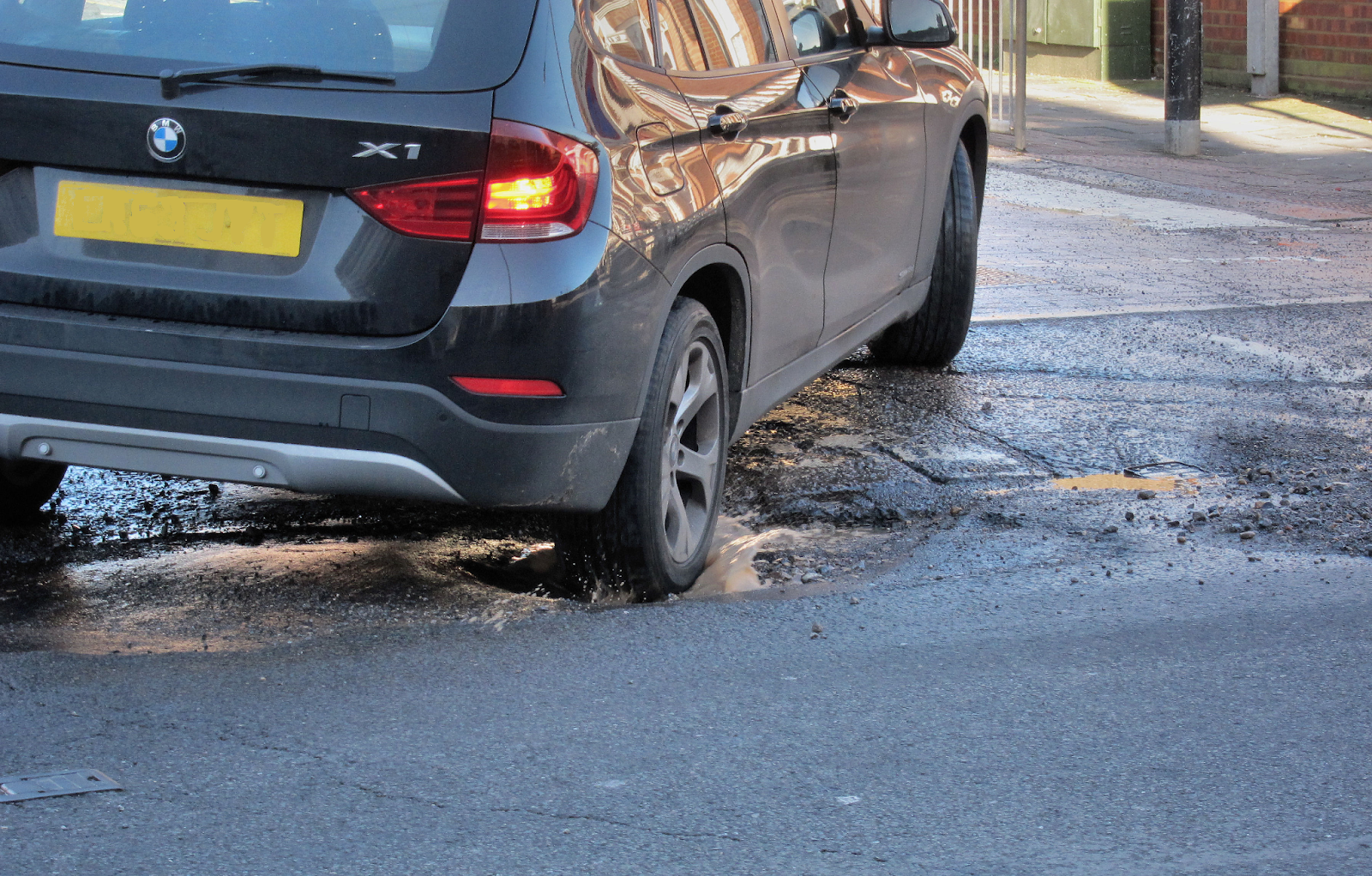
In the latest news, drivers in Tucson are fed up with potholes that seem to appear like those portkeys from Harry Potter novels. How do potholes form? What makes ordinary roads get filled with these holes? These jarring craters wreck tires and suspension systems. But they don’t appear overnight; potholes are a result of certain pavement engineering failures.
We at Sunrise have been operating in Tucson for the last four decades or so… we know a thing or two about pothole formation (and treatment). We’ve repaired thousands of them in The Old Pueblo. Let’s explain the scientific process behind the formation of potholes.
How Do Potholes Form? 5 Simple Stages
Asphalt is a tremendously amazing material for driveways and walkways. But it is not 100% immune to certain engineering & climate-related problems. These bowl-shaped openings represent the areas where asphalt has collapsed into the depths of the Earth. The creation of potholes is a multi-stage process. Understanding this process will give you an idea of how small cracks transform into $15,000 nightmares due to sun, deluges, and traffic!
1. Surface Cracking from Heat & Fatigue
These crevasses appear on roads due to tiny surface cracks. We call it fatigue cracking or alligator cracking. These interconnected patterns look like the skin of a reptile. Arizona has summer temperatures going to extremities like 115°F. This heat is too much for the asphalt binder, aka that black glue holding aggregates together. It becomes brittle.
Overnight lows contract the pavement. This expansion and contractor cycle creates these micro-stresses at gravel-asphalt interfaces. Weak points like parking lot edges are usually the first to go in these cases. Also, Tucson has clay soil that swells by 20% when it’s wet. Heavy traffic also impacts asphalt and worsens the damage caused by the sun,
2. Water Infiltration Through Cracks
Monsoon turns these hairline fractures into water highways. Raindrops disappear into these cracks and migrate laterally. They can go 3 to 5 feet beneath the surface. We like asphalt because of its flexible nature (unlike concrete). But this very flexibility lets water penetrate into its depths. Flash floods on Kolb Road wash fine soil particles away. That’s how you get subsurface voids that eventually lead to the formation of potholes on the road.
3. Base Layer Weakenings (Void Formation)
This water-softened subbase isn’t capable of supporting overlying asphalt. Traffic tires (2 tons per axle) pump contaminated slurry outward. This process forms egg-shell voids that are 6 to 12 inches deep. Vehicles also displace a few gallons of water as they pass over these saturated areas. Support structures keep getting hollow and hollow. We at Sunrise have often seen perfect bowls beneath otherwise pristine-looking asphalt surfaces. This is how they come into being! You now know what causes potholes on Tucson roads.
4. Traffic Punch-Out (The Surface Collapses)
How do potholes form on heavy-traffic roads? Well, weakened pavements can’t properly distribute the load of so many vehicles. Tires punch through this unsupported asphalt like a pie crust over an empty pie plate. A single 18-wheeler crossing a void is like 10,000 cars at the same time. So, your pristine driveway becomes Swiss cheese within a few weeks.
5. Accelerated Expansion Cycle
Fresh potholes also collect standing water and debris. This process restarts this entire process. Edges start crumbling under braking vehicles. Monsoon flows scavenge your precious aggregate. Every week, these holes become 6 inches deeper. They become a major safety hazard and cause Tucson drivers millions of dollars every year.
Some folks in the US have designed self-healing roads that use bacterial powers to fix these potholes. However, the expertise of experienced contractors remains unmatched!
How do potholes form? They appear when you don’t hire paving experts to get the job done right. We at Sunrise use crack filling, sealcoating, and proper drainage grading to fix potholes. Owner Les Sliberman personally supervises every job, ensuring first-time quality that lasts. Get your free estimate today; 40% of our business comes from satisfied repeat clients who avoided pothole disasters. So, let’s take care of your road problems…